
Shrinidhi Backer Rods
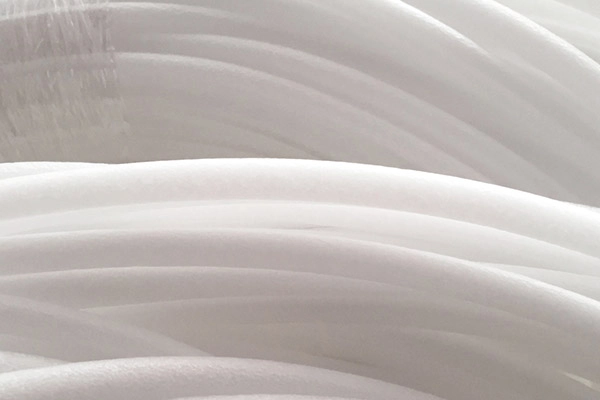
Closed-cell, polymer-based foam filler with a circular profile: the invisible layer behind every well-formed sealant joint.
SHRINIDHI
Backer rods that set the sealant joint up to succeed
Closed-cell foam backer rods from Shrinidhi, supplied across Kerala to control sealant depth and support correct joint geometry in expansion joints and structural glazing systems.
A sealant joint is only as good as what’s behind it. Without a backer rod, sealant gets pushed too deep into the joint, bonds on three sides instead of two, and cracks the first time the joint moves. Shrinidhi’s closed-cell rods fix that before the sealant ever goes in, giving every joint the shape it needs to flex correctly for years, not just at handover. See our wider range of facade and building products for the sealants that pair with this backer rod.
WHAT IT DOES
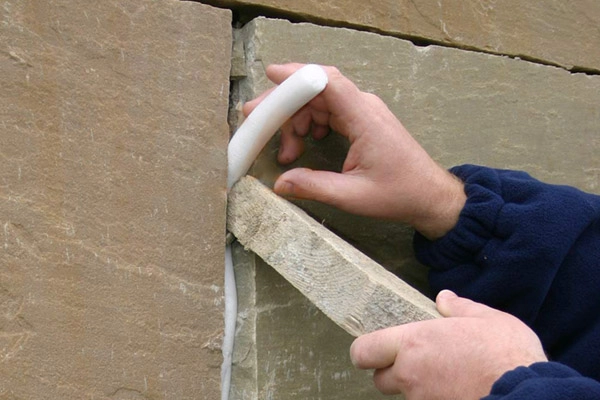
The back-up behind every expansion joint
- Ensures stronger bonding of sealant with masonry, aluminium or other substrates
- Helps maintain the desired sealant thickness at the joint's centre
- Does not bond with cold-applied sealants, for clean removal and correct joint geometry
- Used as back-up to sealants in expansion joints and structural glazing systems
Diameter Range
Standard sizes for every joint width
As a rule of thumb, select a backer rod diameter roughly 25% larger than the joint width so it stays compressed in place. Ask our team for joint-specific advice.
6mm
8mm
10mm
12mm
15mm
20mm
25mm
30mm
40mm
50mm
joint fundamentals
Why a backer rod matters
Three problems show up when a joint skips backer rod, each one shortening the life of the seal in a different way.
Three-sided adhesion
A sealant bonded on three sides instead of two can’t flex properly. As the joint moves, the sealant tears at the back instead of stretching evenly across its face, and the failure often isn’t visible until the joint has already opened up.
Wasted sealant
Filling a deep joint with sealant alone burns through material fast and cures unevenly through the mass. Backer rod fills the bulk of the depth cheaply, so premium sealant is only used where it’s actually doing the sealing work.
Movement over time
A sealant bonded on three sides instead of two can’t flex properly. As the joint moves, the sealant tears at the back instead of stretching evenly across its face, and the failure often isn’t visible until the joint has already opened up.
Material choice
Closed-cell, and why that matters here
Non-absorbent by design
Shrinidhi’s rods use a closed-cell structure with a skinned exterior, so they don’t absorb or wick water into the joint. That makes them the right choice for exterior joints, facade perimeters and any application where moisture reaching the sealant bond would be a problem, unlike open-cell rod which is better reserved for protected interior joints.
Compressible without losing shape
The rod compresses to fit snugly into the joint on installation, then holds its shape as a stable backing while the sealant cures and goes into service. This keeps the sealant’s hourglass profile consistent along the full run of the joint, which is what gives it real movement capability over the building’s life.
Common Applications
Where it's used
Backer rod isn’t just for one type of joint. Shrinidhi’s range covers the sealant backing needs of most facade and structural work.
Structural glazing
Sets consistent sealant depth behind structural silicone joints, working alongside a spacer tape to keep the glazing line even.
Expansion & control joints
Concrete, precast panel and pavement joints, where the rod allows the sealant to accommodate ongoing thermal and structural movement.
Door & window frames
Perimeter sealant joints around frames, where a non-absorbent backing keeps water from tracking into the sealant bond line.
Not sure which size to order?
Send us your joint widths and we'll help you match the right backer rod diameter and sealant.
Click Here